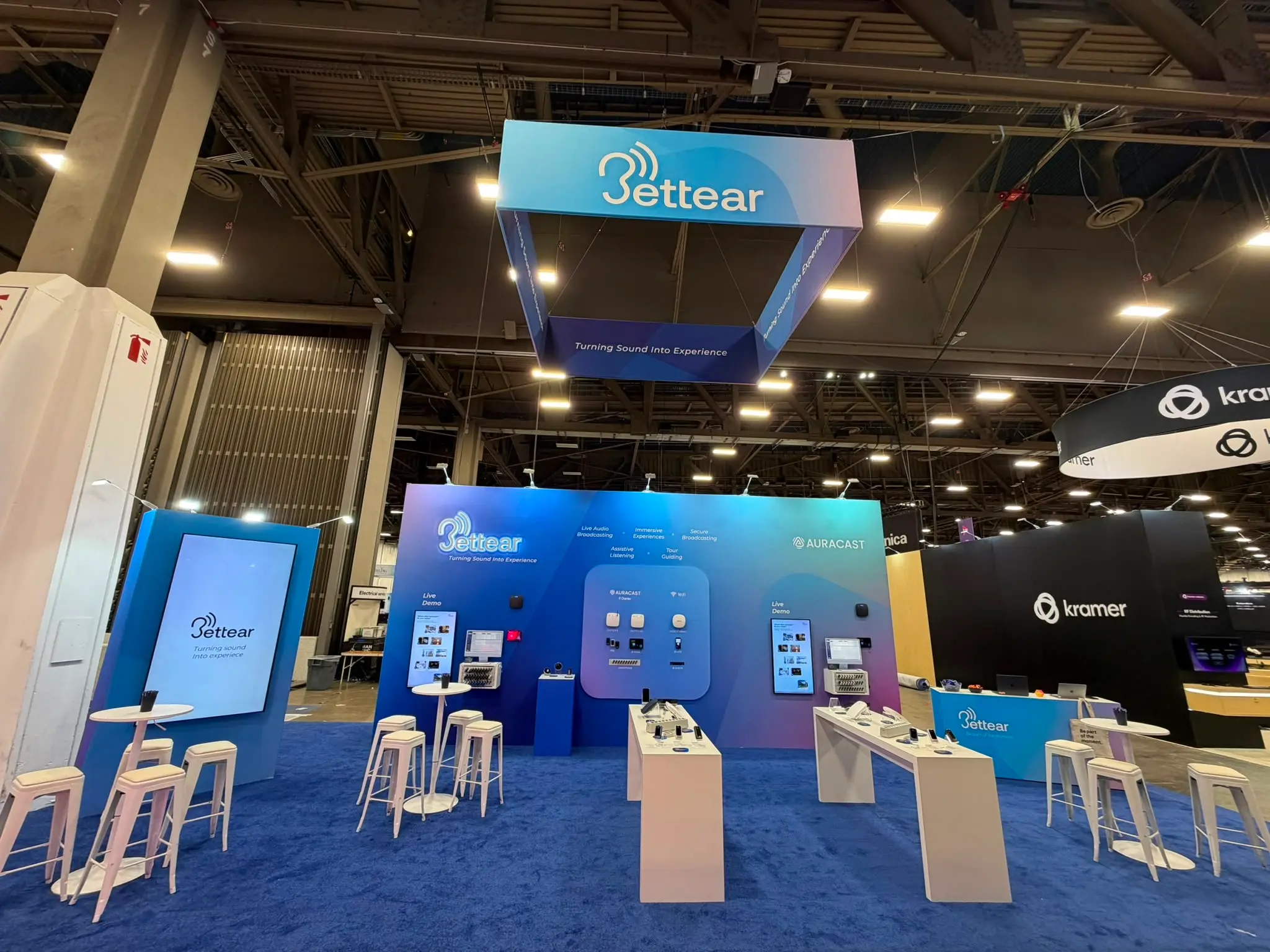

Knowing how to choose an exhibit house matters because it is a multi-year decision: the booth, the crates, the graphics and the storage all follow you from show to show. But most selection checklists stop at portfolios and price. This guide adds the questions that reveal how a partner really works, then the service standards worth putting in the contract. It is written by Blink Studio, a family-owned trade show exhibit house headquartered in Orlando, Florida.
By the Blink Studio team
For exhibit and event managers planning 20×20-plus booths or three or more shows a year.
What is a trade show exhibit house?
A trade show exhibit house designs, builds, ships, installs and stores the booths that companies use at trade shows, so one partner can cover the whole chain. For industry background, see EXHIBITOR magazine. While an agency subcontracts everything and a fabricator only builds, an exhibit house can own more of the process itself.
How to choose an exhibit house: the questions to ask
To choose an exhibit house with confidence, ask every candidate the same questions, then score the answers:
- Who is my single point of contact, and who covers when they are out?
- Which parts of the project do you do in-house, and which do you subcontract?
- How do you handle freight, show forms and show-service orders?
- How do you supervise install and dismantle on site?
- What happens if something is damaged or arrives late?
- How do you report on what is in storage, and how often?
- What do you deliver after the show?
- Can you show recent projects similar to my booth size and show type? (Ask for references.)
- What is included in the quote, and what is paid to the show?
- How do you handle changes after design sign-off?
How to choose an exhibit house: service standards to write into the contract
The questions tell you how a partner talks, but standards tell you what it commits to. So put these in writing:
- One point of contact for the whole project.
- Response times for questions and approvals.
- On-site supervision during install and dismantle.
- Damage and repair handling and timing.
- Storage inventory reports at an agreed frequency.
- A post-show report covering the show, issues and next steps.
Switching exhibit houses: a checklist
If your current provider is not meeting these standards, moving is easier with a plan:
- Inventory every asset you own: structures, millwork, graphics, AV and LED.
- First, request the design files and the production files.
- Count and label crates and confirm who owns them.
- Then plan the transfer from storage and its timing around your next show.
- Document the condition of everything before it moves.
- Schedule the handover so it does not overlap with a show deadline.
Frequently asked questions
How do I choose an exhibit house?
Compare candidates on the same questions: who your single contact is, what is done in-house, how freight and forms are handled, how install is supervised and what is delivered after the show. Then put the service standards in the contract.
What should a trade show RFP include?
An RFP should include the show and dates, booth size, goals, must-have features, AV needs, a line-item price sheet, the service standards and a scoring matrix.
Next step
Planning a selection? Contact our team to talk through your program and learn about our pricing.
Related reading: One exhibit partner or five vendors? · What a 20×20 booth really costs in 2027 · Get a quote.